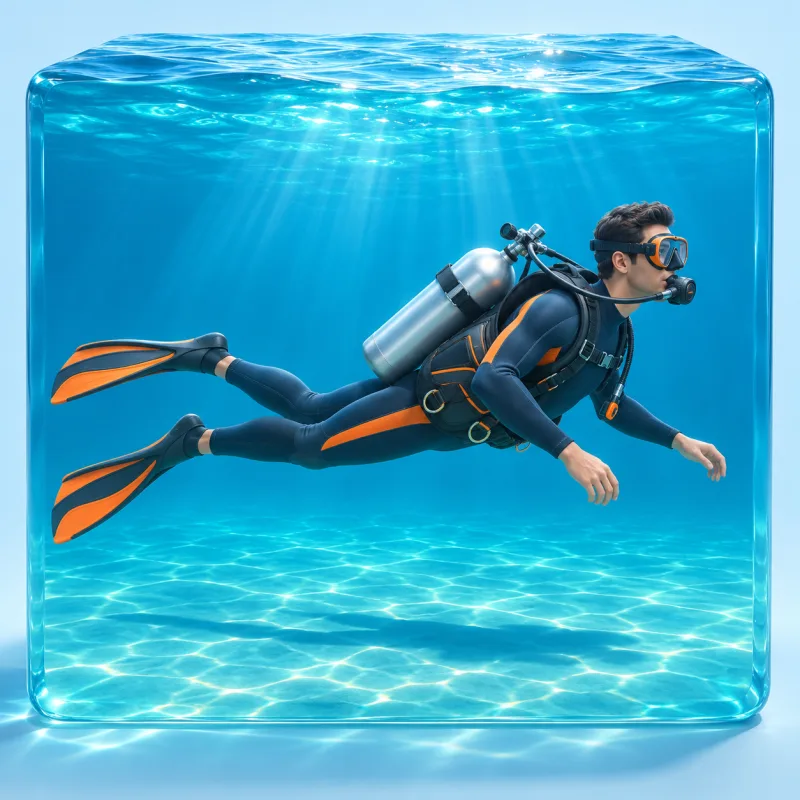
Scuba.
Carry your air.
A filled cylinder travels with the diver. Monitor the available gas throughout the dive.
 WOLACHDIVING MALDIVESWhatsApp
ސްކޫބާއާއި ސަރފޭސް އެއަރ އަޅާކިޔާލައްވާ.
The right air source starts with your dive.
Explore the practical differences in movement, preparation and support. Both systems need suitable training and careful planning.
See the practical comparison ↓A filled cylinder travels with the diver. Monitor the available gas throughout the dive.
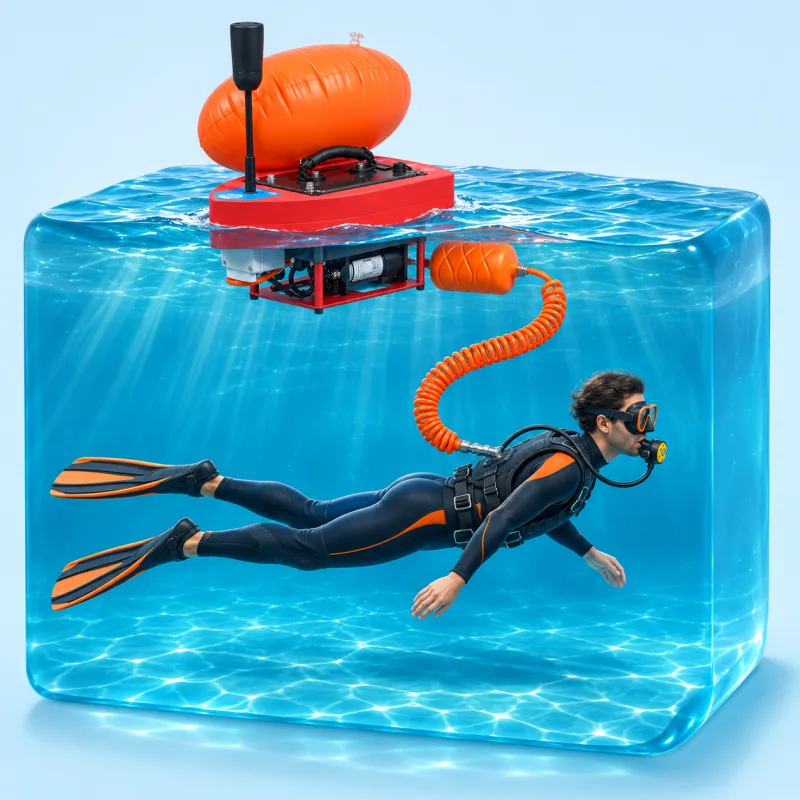
The powered unit stays above. Air reaches the diver through a hose; supply depends on the system.
އާލާތްތަކުގެ ތަފާތުތައް.
Compare conventional open-circuit scuba with battery-powered Wolach systems. Start with your activity, conditions and team’s qualifications.
ScubaA filled cylinder travels with the diver. The available gas is finite and needs to be monitored throughout the dive.
Surface airA powered unit supplies air through a hose. Supply depends on the battery, compressor, intake and intact air path. It is not unlimited air.
ScubaNo air hose connects you to a surface unit. You carry the cylinder and its associated equipment, while managing buoyancy and gas reserves.
Surface airThe main air source stays above you. A hose connects you to it, introducing routing, snagging and surface-unit positioning considerations.
ScubaPlan access to suitable cylinder fills, transport and storage. Filling arrangements and cylinder inspection requirements affect your routine.
Surface airPlan charging, battery condition and the correct charger. Published battery test figures are not guaranteed dive times. Confirm the exact battery version.
ScubaCylinders, valves, regulators and buoyancy equipment all need appropriate checks and servicing. Follow the equipment instructions and applicable inspection rules.
Surface airThe compressor, battery, filters, hoses and regulator also need care. Ask who can service your exact model locally and which parts are available.
ScubaObtain training appropriate to the dive and equipment. Plan gas, buddy procedures and emergency responses with a qualified diving professional.
Surface airA different air source does not remove diving risks. Get suitable diving instruction and model-specific familiarisation, including loss-of-supply procedures and a backup-air plan.
ScubaMatch training, gas planning and equipment to the activity and site conditions.
Surface airConfirm model-specific limits for depth, diver count and conditions. Hose length is not permission to dive to that depth. Currents, boats and intake air quality also need assessment.